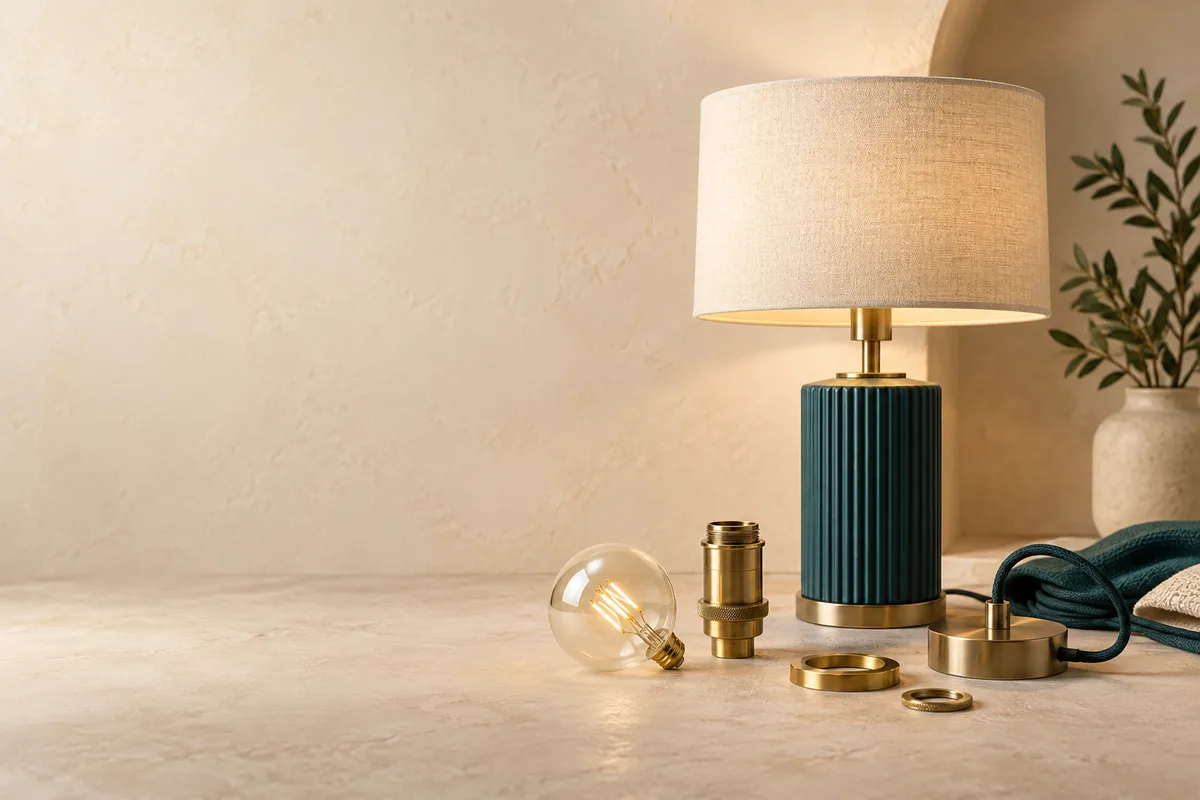
Textile decorative cables
What you should know
About Textile decorative cablesTextile decorative cables: aesthetic wiring for lamps and lighting design
Textile decorative cables, also known as cloth-covered lamp cords or fabric lamp cables, are not just functional—they’re a design element. These cables combine electrical wiring with highly decorative textile sheaths, adding character, colour and style to any lighting fixture. At Lighting DIY, we offer a wide variety of textile decorative cables, including tubular, twisted, braided, and outdoor versions, with multiple finishes and diameters to suit every project.
1. Types of textile decorative cables
-
Tubular textile cables: elegant and minimal, typically in sections of 2×0.75 mm² or 3×0.75 mm², ideal for pendant lamps or visible wiring in interior spaces
-
Twisted or braided cables: with retro or industrial aesthetic, more durable and visually striking—also in similar cross-sections for standard lighting loads
-
Outdoor textile cables: designed with robust sheathing resistant to water and UV, suitable for exterior installations at 3×1.5 mm² section to ensure safety and durability
2. Technical characteristics and safety
Textile cables are standard flex cables covered in a cloth sheath. Their electrical structure isn’t different—heat resistance, conductor section (like 0.75 mm²), and compatibility with LED bulbs determine usability For installations requiring grounding or metal fixtures, choose a 3‑core cable.
3. Why choose textile cables?
From aesthetic to practical reasons: these cables serve as an integral part of the design while meeting electrical safety norms. Available in dozens of colours and finishes (natural cotton, linen, vibrant hues), they coordinate elegantly with accessories like ceramic sockets, ceiling roses, decorative switches, and lamp shades
4. Use cases and DIY inspiration
Textile cables are perfect for:
-
Pendant lamps (single or clusters)
-
Table and floor lamps where cable is visible
-
Wall lamps and designs mixing materials
Clean interiors benefit from braided rustic cables, whereas modern minimalism pairs well with monochrome tubular cords. Their visible nature prompts users to style the cable as part of the decor—not hide it.
5. Care and maintenance
Users often ask how to clean fabric cords. According to Lifehacks forum advice, mild brushing or a DIY cleaning solution (baking soda + warm water) works. Avoid harsh solvents that may degrade fabrics. If severely worn, replacement is safer.
Why buy textile decorative cables at Lighting DIY?
At Lighting DIY we carry high-quality textile cables that meet safety certifications and harmonize with our full range of lamp parts. Whether you’re restoring vintage fixtures or designing a new installation, our cables offer both durable performance and stylish appeal—ideal for DIY lighting kits, custom lamps, and decorative wiring projects