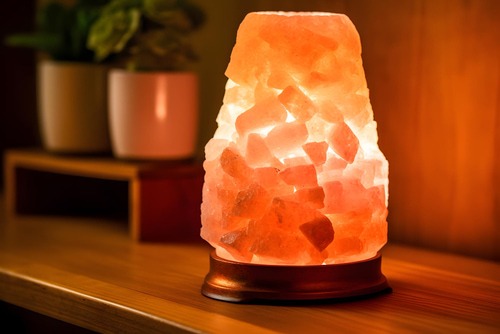
In recent years, salt lamps have become a popular phenomenon in the world of wellness and home décor. These lamps, made from Himalayan salt crystals, are said to offer a number of health benefits, including improving air quality, increasing relaxation, and reducing stress. However, as with many other wellness products, the promises surrounding the benefits of salt lamps are often mixed with marketing and advertising. Today at FabricaTuLámpara, you will learn whether these benefits are supported by science or if they are simply part of a marketing strategy.
What Are Salt Lamps?
A Himalayan salt lamp consists of hand-carved blocks of salt, generally sourced, as the name suggests, from Himalayan salt mines, which are illuminated with a light bulb inside. It is believed that when the lamp is turned on, it emits negative ions that purify the air and improve the environment in which they are placed. These types of lamps have become popular due to their aesthetic appeal and the belief that they have beneficial effects on health, particularly regarding air purification and improving quality of life in indoor environments.
The Theory Behind Salt Lamps
The main argument in favor of salt lamps is that, when heated, they emit negative ions that could neutralize positive ions generated by electronic devices. The latter are associated with the feeling of “heavy air” in enclosed spaces, so neutralizing them could supposedly improve air quality and overall well-being.
Other possible benefits are also attributed to them, such as improving circulation, reducing stress, and strengthening the immune system. However, these claims require scientific evidence to be confirmed.
Advertising or Scientific Evidence?
Although the theory supporting the benefits of salt lamps sounds convincing, the available scientific evidence is limited and, in many cases, unreliable. Several studies on the effects of negative ions on health present methodological shortcomings or have been conducted under highly controlled conditions that do not reflect everyday use.
One example is a 2013 study published in the Journal of Alternative and Complementary Medicine, which indicated possible positive effects of negative ions on mental well-being, although it did not specifically focus on salt lamps. In addition, most research analyzes ions generated by other devices, such as air purifiers, rather than by these lamps in particular.
Regarding their ability to purify the air, there is no conclusive evidence demonstrating a significant improvement. While some people claim relief from symptoms such as allergies or asthma, studies have not proven that the lamps are the direct cause. It is more likely that these improvements are due to other factors, such as proper ventilation or the use of specific air purification technologies.
Subjective Benefits
Despite the lack of scientific evidence, many people report experiencing positive sensations when using salt lamps in their homes. Some mention feeling more relaxed or perceiving a calmer environment. This could be due to the placebo effect, meaning the belief in the product’s benefits regardless of its actual effectiveness. In addition, the warm and soft light they emit can create a sense of calm and well-being. Furthermore, their natural and attractive design also helps create cozy spaces, which can positively influence mood.
Is It Worth Buying a Salt Lamp?
Although the scientific benefits of salt lamps are not fully supported, the value of these lamps may largely depend on personal expectations. If someone is looking for a lamp that creates a cozy and relaxing atmosphere, or simply enjoys its aesthetic appearance, a salt lamp can be an excellent option. However, it is important to remember that the health benefits frequently promoted are based on unverified claims and, in many cases, lack solid evidence.
Salt lamps may offer a pleasant and calming atmosphere, but the benefits related to air purification and improved health should be taken with caution. In the absence of robust scientific evidence, the most sensible approach is to enjoy them as decorative lamps, appreciating their ability to create a relaxing environment without expecting miracles in terms of physical well-being.
```