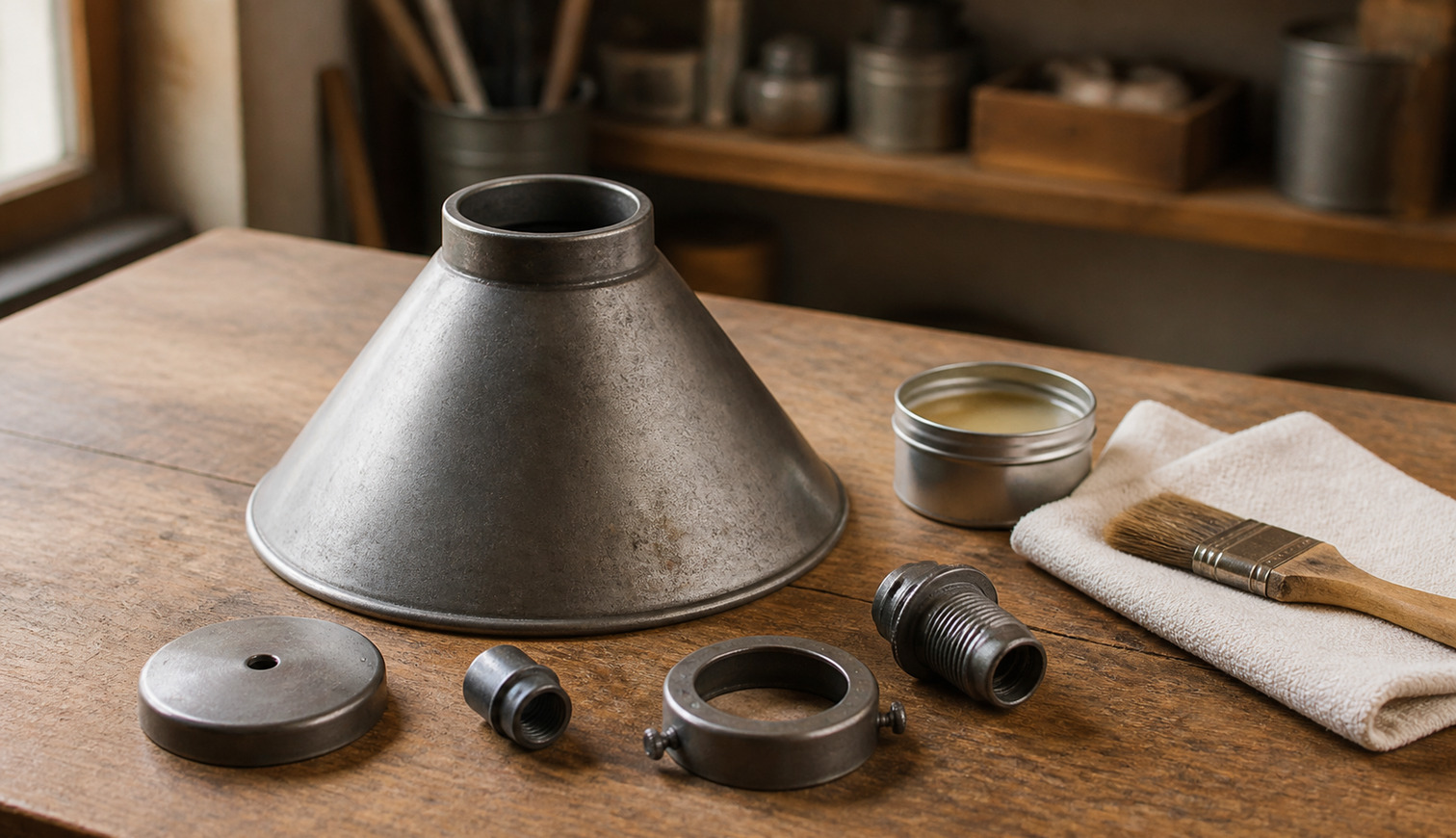
Raw iron offers something that a perfectly painted surface cannot reproduce: subtle marks, tonal changes and the genuine texture of the metal. These details suit industrial, rustic and vintage lighting particularly well. They also come with a practical consideration: unprotected iron can rust.
What does raw iron mean?
A raw iron part has not received a final painted, lacquered, galvanised or anti-corrosion finish. Its surface is not expected to be completely uniform. Light scratches, manufacturing marks and colour variations are part of its natural appearance.
Without a protective barrier, iron reacts with oxygen and moisture. Surface rust may therefore develop over time. How quickly this happens depends heavily on where and how the part is used.
What makes iron rust faster?
Humidity, condensation and direct contact with water are the main factors. Coastal air, poor ventilation and outdoor exposure can accelerate the process. The same shade may remain almost unchanged in a dry room but show early marks when placed near a window affected by condensation.
Keeping the natural metal finish
A clear protective coating made specifically for iron or metal can help preserve the raw appearance. The surface must be clean, grease-free and completely dry. The selected product must also be suitable for its intended environment and for any temperature the shade may reach.
Test the coating on a discreet area first. Some clear products make the metal slightly darker or change its sheen.
What to do when rust is already present
- Gently remove loose rust with a suitable brush or fine abrasive.
- Remove all dust and degrease the surface.
- Allow the part to dry fully.
- Apply a coating designed for prepared metal or stabilised rust, following the manufacturer’s instructions.
Good preparation matters more than simply adding extra coats. A finish applied over loose material will not adhere reliably.
Painting raw iron
If you prefer a different colour, use an anti-corrosion primer followed by a paint or enamel intended for metal. Check adhesion, heat resistance and whether the system is suitable for indoor or outdoor use.
Preserving a rusted look
A rust patina can be a deliberate decorative choice. The aim is not to let corrosion progress unchecked: remove loose residue, stabilise the surface and use a clear product designed to retain that appearance.
Safety around lamp components
Remove the part from the lamp and separate it from cables, lampholders and electrical connections before sanding or coating. Do not apply varnish or paint to electrical contacts, functional threads or earth connection points. Only use parts and finishes explicitly suitable for outdoor use when the lamp will be installed outside.
Choosing iron shades for a project
At Lighting DIY you can browse our range of iron lamp shades and covers. Decide before assembly whether you want protected raw metal, a stabilised aged patina or a painted finish. That choice will make both assembly and future care much easier.
Related products


Bell raw iron 165mm high x 380mm diameter
Raw iron screen of 165mm x 380mmAt the top, it has a 10mm hole to be able to attach it to other accessories. It is recommended to use a wire clamp or cable clampAccessory in the...


Bell shade of raw iron 110mm high x 460mm diameter
Bell screen made of raw iron, 110mm x 460mmAt the top, it has a 42mm drill hole to be able to attach it with E27 type lamp holders that have washers. It is recommended to use a...


Iron lampshade 100mm high x 360mm diameter
Bell screen made of raw iron, 100mm x 360mmAt the top, it has a 42mm drill hole to be able to attach it with E27 type lamp holders that have washers. It is recommended to use a...


Raw iron bell 113mm height x 390mm diameter
Bell shade metal lampshade for pendant light 390 mm This metal bell shade for pendant lights is designed to offer a robust, decorative, and versatile solution for interior...