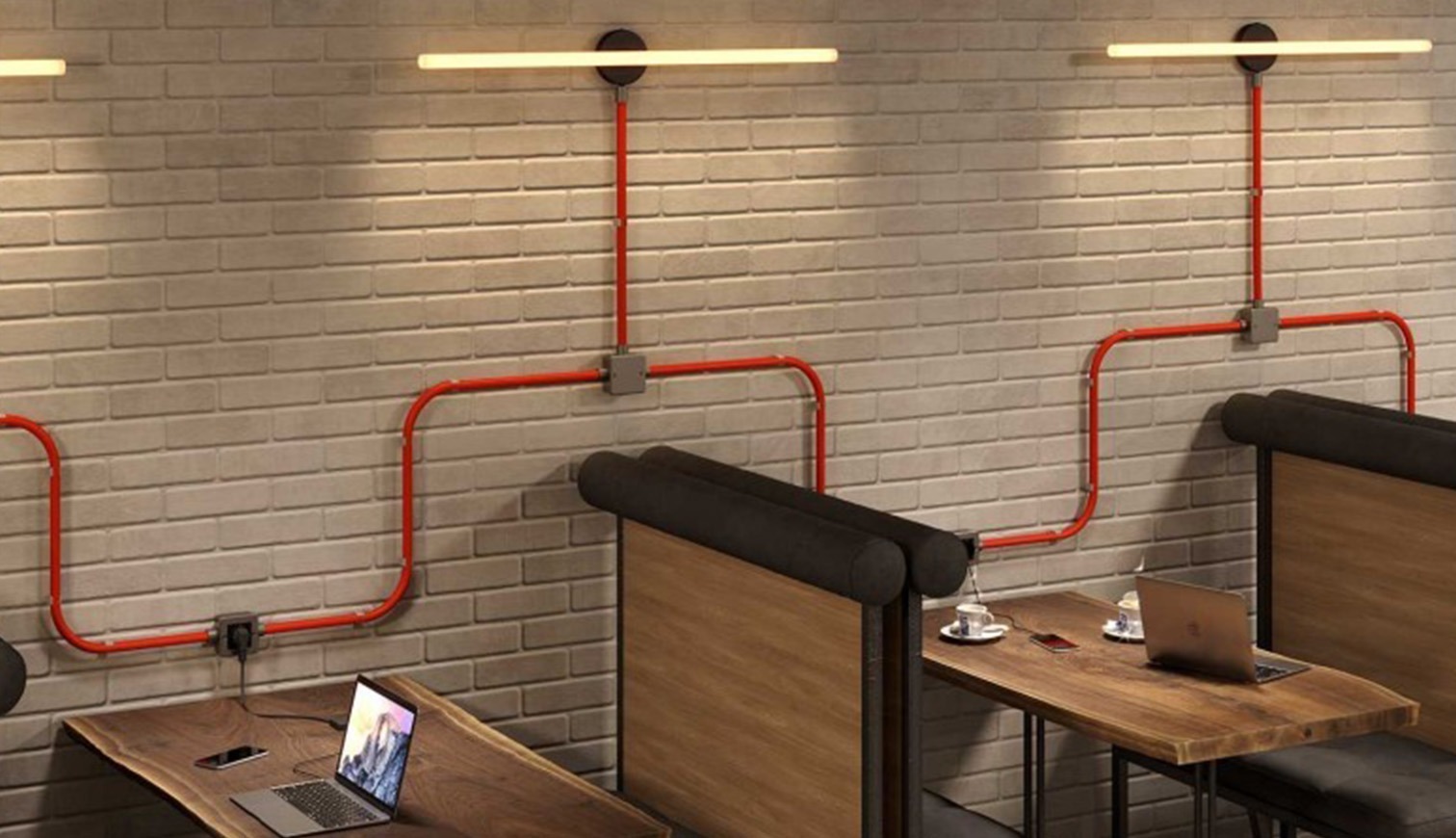
Looking for a creative way to add character to your home without breaking walls? An exposed electrical installation using decorative fabric conduit is the perfect solution. This system lets you run electrical cables visibly along walls, transforming functional wiring into a striking design feature.
What is decorative fabric conduit
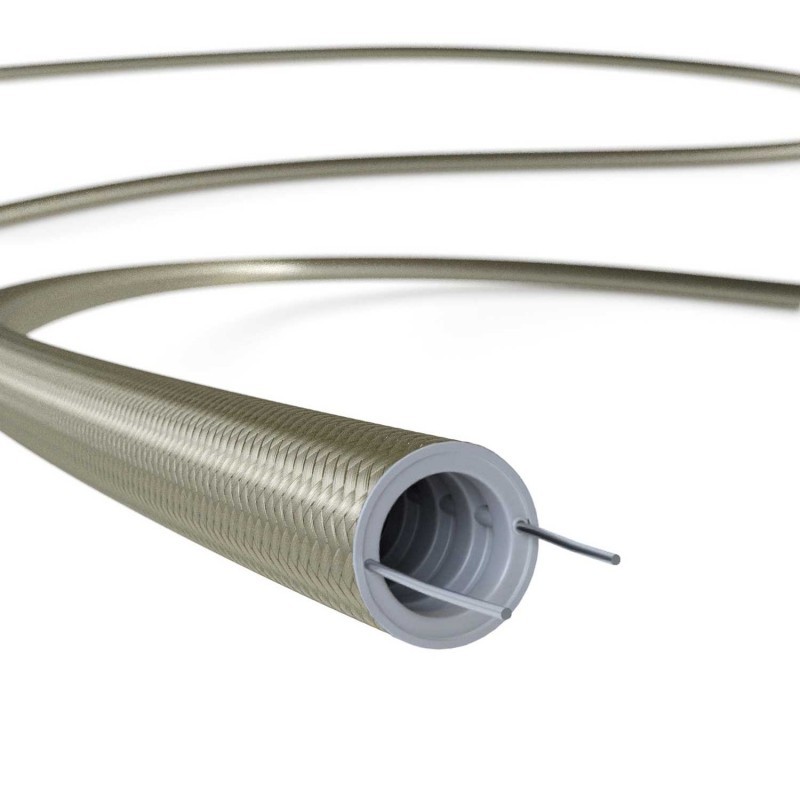
The semi-rigid decorative tube (also known as fabric conduit) is a flexible system designed for surface wiring installations. It consists of a semi-flexible tube covered with a decorative fabric sleeve available in various textures and colours. With an outer diameter of 20 mm and an inner diameter of 15 mm, it safely holds electrical cables while enhancing the aesthetic of any room.
This decorative conduit fits perfectly into industrial lofts, modern apartments or retro interiors. You can find the full range of styles and colours in our online store.
Why choose an exposed electrical system
- No construction work: no need to chase cables into walls.
- Decorative and versatile: available in multiple colours and finishes.
- Flexible and easy to install: perfect for DIY enthusiasts.
- Ideal for homes, studios or commercial spaces: adds style and functionality.
- Safe and durable: compliant with electrical safety standards.
How to install decorative fabric conduit step by step
1. Plan your layout
Start by sketching the route your fabric conduit will follow on the wall. Mark where you’ll place switches, sockets and junction boxes. A clear plan ensures a clean and professional finish.
2. Cut and prepare the tube
The semi-rigid fabric conduit is sold by the metre and delivered in one continuous piece. Cut it to your desired length using a fine saw or utility knife. Then, fit the end adapters to protect the cable and prepare for connection to the modules.
3. Install the adapters
- M10 adapter: allows connection to lamp holders, ceiling roses or threaded M10 accessories.
- Wide thread adapter: used to connect the conduit to surface switches, sockets or connection boxes.
4. Mount the surface modules
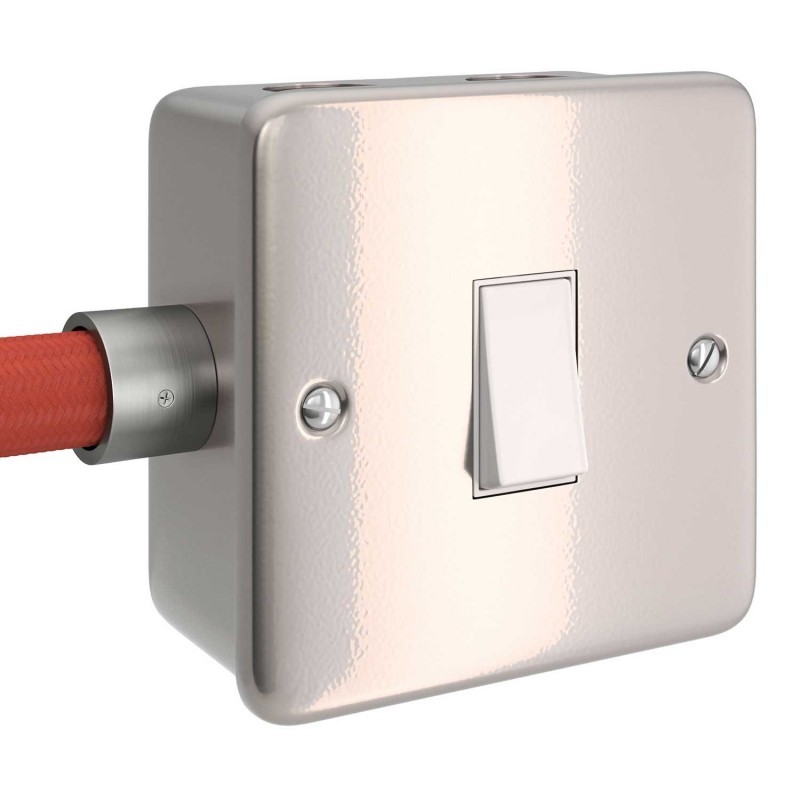
Surface switches and sockets are easy to install. Fix them directly to the wall and connect the internal wires using a terminal block or connection strip. Choose between single or double modules depending on your setup.
5. Add junction boxes and derivations
Blind junction boxes allow safe and neat cable connections between sections. For an industrial look, use metal junction boxes with three or four outlets — ideal for loft-style interiors and creative spaces.
6. Fix the conduit to the wall
You can secure the conduit using two types of clips:
- Plastic clamps: quick to install and highly secure, though slightly visible.
- Metal tensioners: more discreet and elegant — perfect for clean, professional results.
Essential accessories
- Semi-rigid decorative fabric conduit – the main component, covered with high-quality textile.
- M10 and wide-thread adapters – to connect conduit ends to accessories and modules.
- Surface switches and sockets – available as single or double versions.
- Junction boxes and derivations – for neat and safe cable routing.
- Plastic or metal clips – to securely fix the conduit to the wall.
Design ideas and inspiration
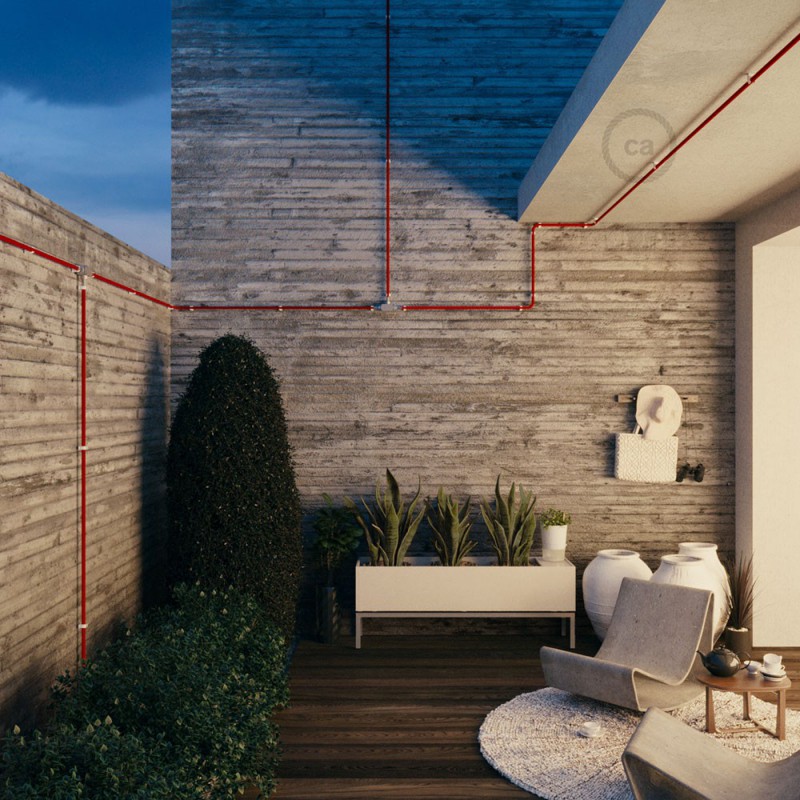
Exposed electrical systems are trending in interior design. Combine black or linen-coloured fabric conduit with brass switches or porcelain fittings for a classic touch, or use bold colours like red or mustard for a more creative look. This style blends perfectly with vintage, industrial or modern minimalist interiors.
Advantages over traditional wiring
Unlike built-in wiring, surface systems are quick to install and easy to modify. There’s no dust, no plaster and no wall damage. You can extend or change your layout anytime by simply adding more conduit or modules. It’s cost-effective, flexible and entirely reversible.
Conclusion
The decorative fabric conduit turns ordinary wiring into a design statement. It’s functional, creative and easy to install — perfect for anyone who wants to combine safety with style. At LIGHTING DIY, you’ll find all the tubes, adapters and accessories needed to build your own exposed electrical system. Bring light and creativity to your walls!
Related products


Decorative semi-flexible beige Ø20 mm tube for exposed electrical runs
Decorative semi-flexible beige Ø20 mm tube for exposed electrical installations Hollow decorative semi-flexible tube for exposed electrical wiring, made of red PVC with a beige...


Decorative semi-flexible red Ø20 mm tube for exposed electrical runs
Decorative semi-flexible red Ø20 mm tube for exposed electrical installations Hollow decorative semi-flexible tube for exposed electrical wiring, made of red PVC with matching...


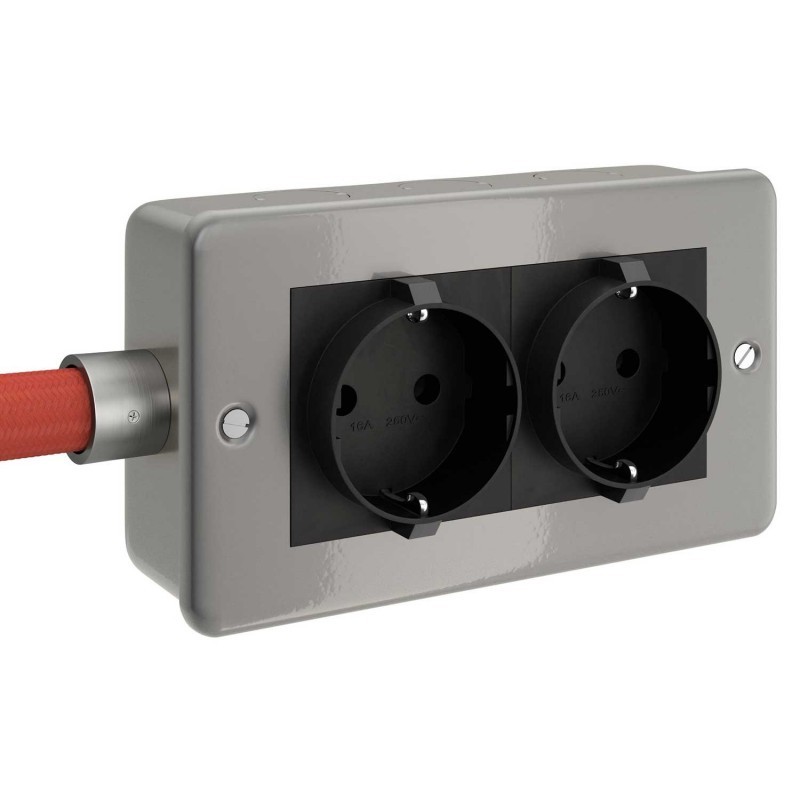
Metal wall box with double French sockets for Ø20 mm flexible tube
Metal wall box with double French sockets for Ø20 mm flexible decorative tube This metal wall box features two 16 A French-type sockets for visible electrical installations...


Surface junction box for Ø20 mm flexible decorative tube
Metal surface junction box for Ø20 mm flexible decorative tube This metal junction box allows you to split and distribute wiring in visible electrical installations using Ø20 mm...